
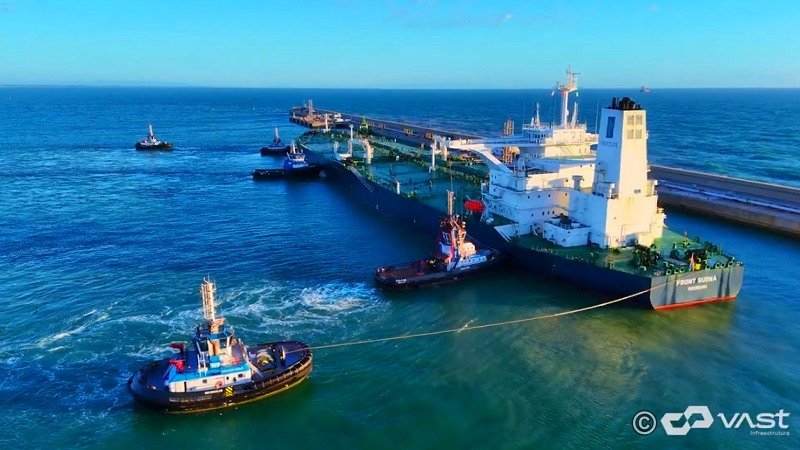
Port of Açu, Brazil | November 4, 2025 – In a pioneering step toward maritime decarbonization, Vast Infraestrutura successfully carried out Brazil’s first operation where all tugboats involved in a maritime maneuver were powered entirely by Hydrotreated Vegetable Oil (HVO). The historic operation took place on October 26, 2025, at Vast’s T-Oil terminal in the Port of Açu, with a total of five Wilson Sons tugboats participating.
This milestone underscores the growing role of biofuels in the maritime sector and highlights Brazil’s emerging position as a regional leader in sustainable shipping operations.
Table of Contents
HVO: A Game-Changer for Low-Carbon Maritime Operations
HVO, also referred to as renewable diesel or green diesel, is a second-generation biofuel produced from renewable feedstocks such as waste oils and fats. Fully compatible with conventional diesel engines, HVO allows vessels to operate without significant engine modifications, making it a “drop-in” solution for decarbonizing existing fleets.
- Environmental Impact: HVO can reduce carbon dioxide (CO₂) emissions by over 70% across its life cycle, including production, transport, and combustion. It also significantly reduces particulate matter and sulfur oxide emissions compared to traditional marine diesel.
- Operational Compatibility: Its drop-in nature ensures full operational efficiency, with no impact on engine performance, maneuverability, or safety — critical for tugboats engaged in precision harbor operations.
This operation builds on the first HVO refueling in Brazil’s maritime sector, conducted in May 2025 at Vast’s Liquid Bulk Terminal of Açu (TLA), marking the beginning of a systematic integration of renewable fuels into Brazilian port operations.
Vast Infraestrutura’s Decarbonization Journey
The all-HVO tugboat operation is part of Vast’s Decarbonization Journey, a strategic initiative to accelerate the adoption of low-carbon fuels in maritime logistics. The initiative focuses on:
- Promoting Biofuels: Demonstrating the operational viability of HVO for harbor vessels, workboats, and terminal support fleets.
- Sustainable Operations: Reducing greenhouse gas emissions across all terminal and vessel activities, in line with Brazil’s growing environmental commitments.
- Scaling Clean Fuel Adoption: Creating replicable models for other terminals, operators, and ports throughout Latin America.
“We are proud to achieve this landmark operation,” said Vast Infraestrutura. “By powering all tugboats with HVO, we are demonstrating that decarbonization is not just a vision — it is practical, safe, and immediately actionable. Our goal is to lead the maritime industry toward sustainable, low-carbon operations.”
Wilson Sons: Pioneering Green Marine Operations
Wilson Sons, one of Brazil’s largest maritime services providers, supplied the five tugboats that executed the maneuver powered entirely by HVO. The company has been actively integrating renewable fuels and exploring hybrid solutions across its fleet, supporting efforts to reduce environmental impacts while maintaining high operational standards.
Their participation in this milestone operation highlights the collaborative nature of the initiative, demonstrating that both port operators and service providers can work together to advance sustainable maritime practices.
Port of Açu: A Hub for Sustainable Maritime Innovation
The operation at the T-Oil terminal reinforces the Port of Açu’s role as a leader in green maritime logistics. Coupled with prior initiatives at the Açu Liquid Terminal (TLA), Vast Infraestrutura is positioning the port as a biofuel-friendly hub, capable of supporting future fuels such as HVO, e-methanol, and sustainable aviation fuel (SAF).
By integrating biofuels into everyday port operations, Vast demonstrates the feasibility of scaling renewable energy solutions without compromising operational performance — a critical step for global shipping’s decarbonization pathway.
Looking Ahead: Scaling Renewable Marine Fuel Use
Following this milestone, Vast Infraestrutura and Wilson Sons plan to:
- Expand HVO refueling operations to additional vessels, including workboats and service fleets.
- Collaborate with other port operators and stakeholders to promote biofuel adoption across Brazil.
- Collect and publish operational and emissions data to inform regulatory frameworks and industry best practices.
This operation marks a pivotal moment in Brazil’s maritime decarbonization, demonstrating that biofuels like HVO are not theoretical solutions — they are practical, scalable, and ready to reduce emissions in real-world port and harbor operations.
About Wilson Sons
Founded in 1837, Wilson Sons is a leading Brazilian maritime services provider, specializing in tugboat operations, logistics support, offshore services, and fleet management. The company has been actively integrating renewable fuels, hybrid propulsion, and energy-efficient solutions into its operations, driving innovation and sustainability in the maritime sector.
About Vast Infraestrutura
Part of the Prumo Group, Vast Infraestrutura manages energy and liquid terminals at the Port of Açu, including T-Oil and TLA. Committed to operational excellence, sustainability, and innovation, Vast is expanding its capabilities to support low-carbon and alternative fuels, positioning itself as a benchmark for decarbonized maritime logistics in Latin America.
Source: Vast Infraestrutura