
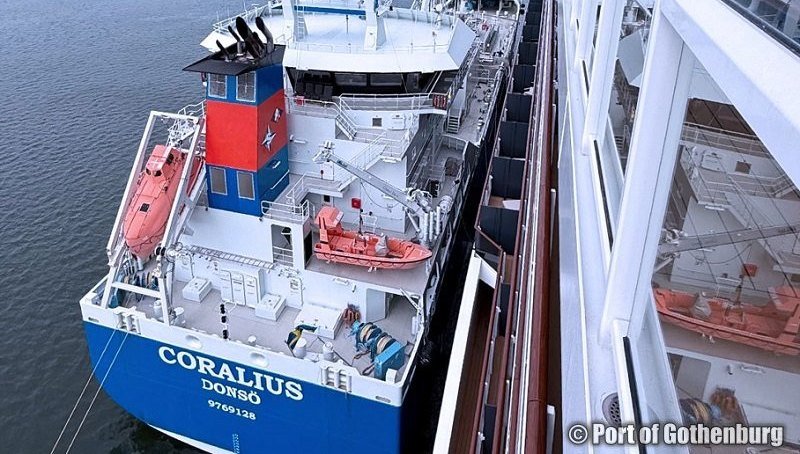
Port of Gothenburg marks a historic milestone by completing its first LNG bunkering for mega yacht RC Ilma, powered by Gasum and coordinated by Sirius Agency, on a record-setting cruise day.
Gothenburg, Sweden – July 2025 — The Port of Gothenburg marked a landmark day for both sustainable maritime logistics and Northern European cruise tourism, successfully completing its first-ever Liquefied Natural Gas (LNG) bunkering operation for a luxury mega yacht. The vessel—RC Ilma, operated by The Ritz-Carlton Yacht Collection—was fueled with LNG in a milestone event that underscored the port’s rising status as a center for green shipping in Europe.
The bunkering took place on a day already destined for the history books, as the port welcomed four cruise ships simultaneously, bringing more than 3,000 visitors to Sweden’s west coast. The convergence of high-capacity cruise traffic with a groundbreaking environmental operation reflects the Port of Gothenburg’s dual commitment to tourism growth and decarbonization leadership.
Table of Contents
A Landmark Day at Scandinavia’s Largest Port
On this historic day, the Port of Gothenburg welcomed four passenger ships: the ultra-luxurious RC Ilma from The Ritz-Carlton Yacht Collection, AIDAmar operated by AIDA Cruises, Clio from Grand Circle Cruise Line, and Le Lapérouse representing Compagnie du Ponant. While each vessel contributed to a vibrant and festive atmosphere in the port and city, it was the LNG bunkering of RC Ilma that stood out as a pivotal milestone in Gothenburg’s ongoing transition toward a low-emission maritime future.
LNG: A Vital Step Toward Cleaner Oceans
LNG has emerged as a leading transition fuel in the global maritime industry, helping vessels meet increasingly stringent air pollution and carbon reduction regulations.
Compared to conventional marine fuels, LNG delivers the following emission reductions:
- Sulphur oxides (SOx): Virtually eliminated
- Nitrogen oxides (NOx): Reduced by up to 85%
- Particulate matter (PM): Nearly eradicated
- Carbon dioxide (CO₂): Lowered by 20–30%, depending on engine and route efficiency
While not a zero-carbon solution, LNG’s immediate benefits to air quality and carbon intensity are recognized by regulatory authorities such as the International Maritime Organization (IMO) and the European Union. Additionally, it serves as a gateway to future fuels like bio-LNG, synthetic methane, and hydrogen-derived alternatives.
RC Ilma: Ultra-Luxury Meets Environmental Responsibility
RC Ilma represents the pinnacle of next-generation sustainable cruise design. As the newest vessel in The Ritz-Carlton Yacht Collection, it pairs exceptional onboard experiences with forward-leaning environmental technologies.
Key specifications:
- Length: 241 meters
- Gross Tonnage: 46,750
- Suites: 224, each with a private terrace
- Guest Capacity: 448
- Crew Complement: 374
- Features: Five restaurants, six bars, a wine vault, fitness and wellness facilities, and an aft marina for water activities
The ship is powered by dual-fuel engines capable of running on both LNG and marine gas oil (MGO). It also incorporates advanced wastewater treatment, energy-efficient systems, and low-noise propulsion, all designed to minimize ecological impact both at sea and in port.
Execution Excellence: Coordinated Bunkering Operation
The successful LNG bunkering of RC Ilma was the result of seamless coordination among key industry stakeholders:
- Sirius Agency, part of the Sirius Shipping Group, managed the bunkering logistics, overseeing planning, safety compliance, and technical coordination. With over 80 years of maritime operations experience, Sirius Agency is a trusted facilitator for complex port services across Northern Europe.
- Gasum, the Nordic region’s leading energy company and a pioneer in marine LNG supply, provided the fuel. Gasum’s flexible, safe, and scalable bunkering services play a key role in helping vessel operators transition to lower-emission fuels without compromising operational efficiency.
The LNG was delivered by LNG bunker vessel Coralius, a purpose-built ship designed specifically for ship-to-ship LNG fuel transfers. Since entering service in 2017, Coralius has completed hundreds of LNG bunkering operations, including for ferries, oil tankers, car carriers, and cruise ships across the Baltic and North Sea regions.
While Coralius executed the delivery, it served as the operational platform in this case—operated under contract with Gasum—rather than being a direct partner to the port or shipowner.
Port of Gothenburg’s Commitment to Sustainable Maritime Infrastructure
As Scandinavia’s largest port and a critical gateway for Sweden’s foreign trade, the Port of Gothenburg has positioned itself as a regional leader in green shipping innovation. This first LNG bunkering of a cruise vessel further solidifies its long-term sustainability strategy.
Ongoing and completed initiatives include:
- Shore power connections for ferries and tankers, with cruise ship capacity under expansion
- Electrified rail access and intermodal terminals for low-emission freight distribution
- Digital port call optimization, reducing wait times and energy use
- Green corridor pilots with regional and international partners focused on next-generation fuels
These infrastructure investments align with both national Swedish climate policy and the EU Fit for 55 package, helping reduce maritime emissions while maintaining the port’s competitive edge in trade and tourism.
Looking Ahead: A Port Ready for the Next Generation of Vessels
The Port of Gothenburg expressed its appreciation to RC Ilma’s crew, Sirius Agency, and Gasum for ensuring a safe and successful bunkering operation. The port views this milestone as a starting point—not a culmination—as it prepares to support a growing fleet of alternative-fuel vessels.
The Port of Gothenburg regards this LNG bunkering as a milestone in its journey toward greener shipping. “This historic operation is a testament to what collaboration, infrastructure, and forward-thinking strategy can achieve. We’re proud to lead Northern Europe in facilitating the green transition of cruise and commercial shipping.”
As maritime operators increasingly prioritize decarbonization, fuel diversification, and climate resilience, Gothenburg stands as a living model of what ports can—and must—do to meet the evolving demands of global shipping.
Source Port of Gothenburg