
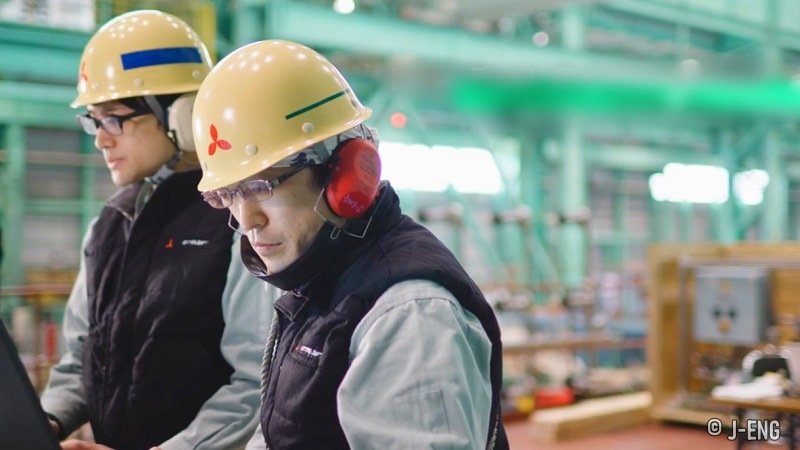
Akashi, Japan | December 16, 2025 – Japan Engine Corporation (J-ENG) has formally commenced development of its methanol-fueled low-speed marine engine, the UEC50LSJM, further expanding its multi-fuel strategy as global shipping accelerates toward carbon neutrality.
The announcement follows the successful completion of J-ENG’s first commercial ammonia-fueled engine, the 7UEC50LSJA, in August 2025. In parallel, the company is also advancing development of the hydrogen-fueled 6UEC35LSGH, reinforcing J-ENG’s position at the forefront of next-generation marine propulsion.
Leveraging the engineering expertise and operational insights gained from its ammonia and hydrogen programs, J-ENG aims to complete development of the methanol engine within fiscal year 2027, significantly shortening the typical development cycle for new-fuel platforms.
Table of Contents
Methanol: A Practical Pathway to Lower Emissions
Methanol is increasingly recognized as a pragmatic alternative marine fuel, offering meaningful reductions in greenhouse gas emissions alongside substantial cuts in sulfur oxides (SOx), nitrogen oxides (NOx), and particulate matter.
Unlike gaseous fuels, methanol remains liquid at ambient temperature and atmospheric pressure, simplifying storage, handling, and bunkering. These characteristics make it particularly attractive for medium- and small-sized vessels, where fuel system complexity and space constraints are critical considerations.
Looking ahead, J-ENG highlighted methanol’s longer-term decarbonization potential through the anticipated growth of green methanol, produced from biomass and renewable energy sources, which could deliver significantly deeper lifecycle GHG reductions.
Building a Multi-Fuel Future
By simultaneously advancing ammonia, hydrogen, and methanol engine platforms, J-ENG is positioning itself as a first mover in the next generation of marine propulsion. The company stated that this diversified approach will support the competitiveness of Japan’s shipping and shipbuilding industries, while offering shipowners practical fuel flexibility amid evolving regulations and fuel availability.
J-ENG reaffirmed its commitment to reducing greenhouse gas emissions across the global shipping sector and contributing to the industry’s goal of achieving carbon neutrality by 2050.
Japan Engine Corporation: Architect of Zero-Emission Propulsion
Headquartered in Akashi, Japan, Japan Engine Corporation has emerged as a cornerstone of the global marine propulsion industry. Formed in 2017 through the consolidation of Kobe Diesel and Mitsubishi Heavy Industries’ marine engine division, J-ENG is the only manufacturer with an integrated system for the UE low-speed engine, one of the three dominant platforms worldwide.
By late 2025, J-ENG has evolved beyond traditional engine manufacturing to become a central architect of shipping’s transition to carbon-neutral fuels.
The UE Engine Legacy
Japan’s domestically developed UE engine series has long rivaled global leaders such as MAN and WinGD. Known for high thermal efficiency and compact design, the platform has progressed through several defining generations:
- LSH Series: Optimized for maximum fuel economy using conventional fuels
- LSJ Series: Incorporating proprietary stratified water injection for enhanced efficiency on MGO
- LSJA Series: The world’s first commercial-grade ammonia-fueled low-speed engines
2025: A Year of Breakthroughs
Three milestones in 2025 have redefined J-ENG’s market position:
- Ammonia Propulsion: Completion of the 7UEC50LSJA-HPSCR, setting a new global benchmark for low-carbon gas carriers
- Hydrogen Advancement: World-first land-based operation of a marine hydrogen engine at the Akashi factory, in partnership with Kawasaki Heavy Industries and Yanmar
- Methanol Expansion: Launch of the UEC50LSJM methanol engine program, targeting completion in 2027
Corporate Strength and Future Outlook
J-ENG operates with a highly specialized workforce of approximately 400 professionals, supported by a blue-chip shareholder base including:
- Mitsubishi Heavy Industries, Ltd.
- Namura Shipbuilding Co., Ltd.
- Shin Kurushima Dockyard Co., Ltd.
This tightly integrated ecosystem enables rapid iteration, testing, and deployment, an advantage few global competitors can match.
Looking ahead, J-ENG’s GX-funded production facility, scheduled for 2028, will be the first dedicated plant designed for the high-volume manufacture of ammonia and hydrogen marine engines, firmly anchoring Japan’s leadership in the next era of maritime propulsion.
Source: Japan Engine Corporation