December 18, 2025 – The Clean Arctic Alliance has welcomed a major new proposal submitted to the International Maritime Organization (IMO) that could significantly reduce the impact of black carbon emissions from international shipping in the Arctic, marking a potentially transformative moment for Arctic protection, climate action, and the future of marine fuels.
The proposal, submitted to the IMO’s Pollution Prevention and Response Committee (PPR 13), seeks to establish a dedicated Arctic fuel measure under MARPOL Annex VI, targeting one of the most potent climate pollutants emitted by ships operating in polar waters: black carbon.
If agreed at the IMO meeting scheduled for February 2026, the measure would represent the most concrete regulatory step yet to curb shipping’s warming impact on the Arctic, a region already heating nearly four times faster than the global average.
Table of Contents
Why Black Carbon Matters in the Arctic
Black carbon, commonly known as soot, is produced by the incomplete combustion of fossil fuels, particularly heavy fuel oil and certain distillate fuels still widely used in shipping. While short-lived in the atmosphere, black carbon is a “super-pollutant” with outsized warming effects.
In the Arctic, its impact is especially severe:
- When deposited on snow and ice, black carbon reduces surface reflectivity, accelerating melting
- It contributes directly to regional temperature rise
- It poses serious health risks to Arctic and Indigenous communities
Shipping has become an increasingly significant source of black carbon in Arctic waters as vessel traffic expands due to sea-ice retreat and growing economic activity.
The Proposal: Cleaner Fuels for Polar Waters
The IMO submission, Paper PPR 13-6, has been jointly put forward by four IMO member states and calls for the establishment of a fuel standard specifically designed to reduce black carbon emissions from ships operating in or near the Arctic.
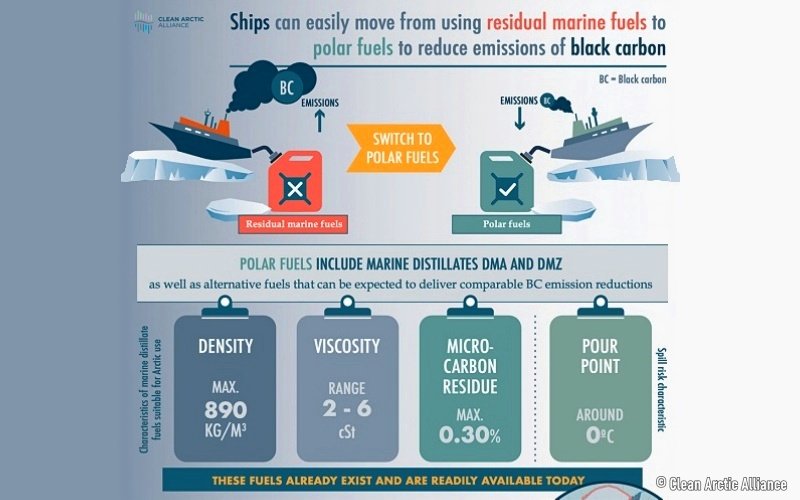
Rather than relying solely on technical measures or voluntary guidelines, the proposal focuses on fuel choice itself, recognizing that switching to cleaner marine fuels can deliver immediate and substantial reductions in black carbon emissions.
While the precise geographical scope of the proposed fuel measure has yet to be defined, its intent is clear:
to move Arctic shipping away from high-emitting fuels and toward cleaner alternatives with demonstrably lower black carbon output.
Clean Arctic Alliance: “An Essential First Step”
The Clean Arctic Alliance, representing 24 non-profit organizations from across the globe—has been campaigning for years to address black carbon emissions from shipping as one of the fastest ways to slow Arctic warming.
Dr. Sian Prior, Lead Advisor to the Alliance, described the proposal as a breakthrough moment:
“The Clean Arctic Alliance welcomes the proposal for an Arctic fuel measure which, if agreed upon during February’s IMO meeting, will have positive benefits for both the Arctic and the global climate, as well as provide positive health benefits for Arctic communities.”
Dr. Sian emphasized that broader international support will be crucial during negotiations:
“It is important that other Arctic and climate-vulnerable states step up to support the proposal during the discussions at PPR 13 – action to reduce emissions of super-pollutant black carbon is essential for remaining in line with the Paris climate targets and will be an important first step towards reducing international shipping’s climate impact.”
What This Means for Shipping and Bunkering
For the global shipping and bunkering industries, the proposal signals a clear regulatory direction of travel.
If adopted, an Arctic fuel measure under MARPOL Annex VI could:
- Accelerate demand for cleaner distillate fuels and alternative low-soot blends
- Reduce reliance on high-emission residual fuels in polar operations
- Influence fuel availability, pricing, and logistics in Arctic and sub-Arctic ports
- Set a precedent for future region-specific fuel regulations elsewhere
Importantly, the proposal complements, rather than replaces, ongoing IMO discussions on scrubbers, fuel standards, and broader greenhouse gas reduction measures.
Papers Submitted to IMO PPR 13
The Arctic fuel proposal is supported by a package of technical and regulatory submissions, including:
- PPR 13-6 – Proposal to establish a fuel measure under MARPOL Annex VI to reduce black carbon emissions from international shipping
- PPR 13-6-1 – Polar fuels under MARPOL Annex VI as a means to reduce the impact of ship black carbon emissions
- PPR 13/7/2 – Proposal relating to scrubbers and further regulatory development under IMO output 1.23
Together, these documents aim to provide the IMO with both the policy framework and technical justification required to act.
A Defining Moment Ahead
With Arctic shipping activity expected to grow in the coming decades, February 2026’s IMO meeting may prove decisive. Adoption of an Arctic fuel measure would not only protect one of the world’s most fragile ecosystems, but also demonstrate the IMO’s ability to deliver targeted, science-based climate action.
For shipowners, charterers, bunker fuel suppliers, and regulators alike, the message is unmistakable:
the era of business-as-usual fuels in the Arctic is coming to an end.
About the Clean Arctic Alliance
The Clean Arctic Alliance is a coalition of 24 not-for-profit organizations campaigning for stronger international action to protect the Arctic, its people, and its wildlife from the impacts of shipping and industrial pollution.
Member organizations include: Alaska Wilderness League, Bellona, Clean Air Task Force, ECODES, Environmental Investigation Agency, Equal Routes, Friends of the Earth US, Greenpeace, Ocean Conservancy, Pacific Environment, Seas At Risk, Stand.Earth, Transport & Environment, WWF, and others.
Source: Clean Arctic Alliance